
Trust and Decisiveness: The Mental Skill That Lets Athletes Play Free
Key Takeaways
Trust is deeper than confidence — it's the ability to stay committed in the middle of uncertainty.
Hesitation creates tension; decisive athletes play free while indecisive athletes play tense.
Indecision is often more damaging than mistakes, because mistakes can be recovered from — lost rhythm can't.
Trust, confidence, and decisiveness are all built the same way: through reps and real decisions.
Parents build self-trust by letting athletes think and decide — not by solving every problem for them.
One of the most important mental skills in sports is trust.
Not just confidence.
Trust.
Most athletes think trust means feeling confident before competition. They think trust means feeling calm, certain, fearless, or fully prepared.
But trust is deeper than a feeling.
Trust is the ability to stay committed in the middle of uncertainty.
Trust is what allows an athlete to perform freely under pressure.
You Can't Control the Outcome — You Can Control Your Response
In sports, there is almost always uncertainty. No athlete controls the outcome. You cannot fully control the score, the opponent, the referee, the weather, the crowd, or whether adversity shows up during competition.
But you can control your response.
You can stay present.
You can trust your preparation.
You can commit to the next moment.
You can compete with freedom instead of fear.
That is trust.
Athletes who struggle mentally are often trapped between outcomes and overthinking. Their mind drifts into:
"What if I fail?"
"What if I make a mistake?"
"What will people think?"
"I have to be perfect today."
The moment athletes become consumed with outcomes, pressure increases.
Tension rises.
Hesitation increases.
The body tightens.
Reaction slows down.
Athletes begin guiding instead of attacking.
This is why trust matters so much.
Trust simplifies performance.
Keep it simple.
Be where your feet are.
Trust your preparation.
Make the next best decision.
Give the best of what you have.
That is how great athletes compete.
The Clearest Sign of Trust Is Decisiveness
Decisive athletes play free.
Indecisive athletes usually play tense.
Why?
Because hesitation creates tension.
When athletes hesitate, they are often caught between fear and commitment. Part of them wants to attack, while another part fears failure or mistakes. That internal conflict creates tension within the body and mind.
But decisive athletes are different.
They choose.
They commit.
They attack.
They adapt.
A pitcher trusts the pitch call and attacks the target.
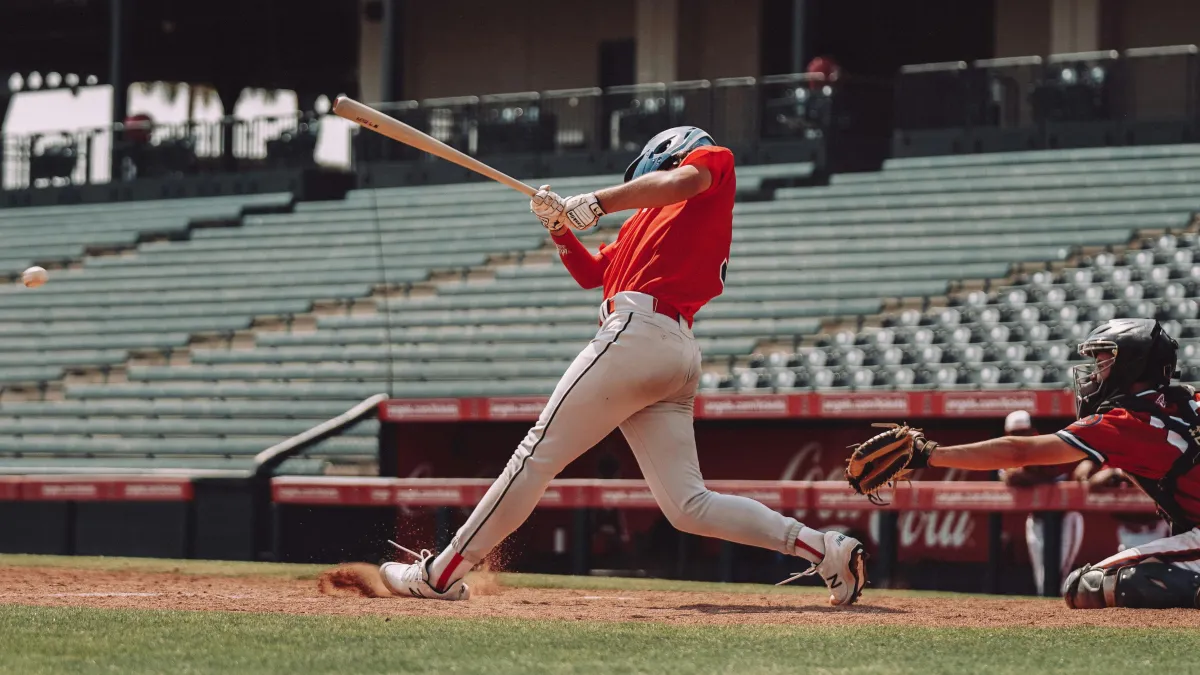
A hitter commits fully to the swing.
A quarterback trusts the read and delivers the throw.
A hockey forward shoots instead of guiding the puck.
A point guard takes the open shot instead of passing out of it.
A soccer player takes the defender on instead of playing it safe sideways.
A tennis player attacks the shot instead of guiding it.
Decisiveness does not mean athletes always know the perfect answer.
It means they are willing to fully commit to the decision in front of them.
Elite athletes understand something important:
Indecision is often more damaging than mistakes.
Why?
Because mistakes can be recovered from.
But hesitation pulls athletes completely out of rhythm, timing, freedom, and aggression.
Trust allows athletes to stay aggressive, athletic, and free even when things are imperfect. That freedom under imperfect conditions is the heart of real mental toughness.
Trust Is Built Through Reps
Decisiveness is not something athletes magically develop one day during a big game.
It is built through reps.
Trust is built through reps.
Confidence is built through reps.
Kids build trust in themselves by making decisions, learning from mistakes, adapting, recovering, and realizing:
"I can handle this."
What Parents and Coaches Can Do
One of the biggest mistakes adults make is removing too many opportunities for kids to think and decide for themselves.
When parents constantly solve problems, hover too closely, rescue immediately, or provide every answer, kids can unintentionally miss opportunities to build ownership and self-trust.
The goal is not perfection.
The goal is learning how to respond.
Confident athletes are usually athletes who have learned:
"I can figure things out."
"I can recover."
"I can adjust."
"I can move forward."
That is real confidence. (For more on growing it deliberately, see how to build confidence in youth athletes.)
One of the best things parents and coaches can do is create environments where athletes are allowed to think, decide, and adapt.
Instead of immediately stepping in, try asking:
"What do you think?"
"What's your next best decision?"
"How can you respond to this?"
"What can you control right now?"
These questions help athletes develop ownership.
And ownership builds trust.
One more reason this matters: college coaches see hesitation too. It shows up on film faster than almost anything else — recruiters can't always tell why a player hesitated, but they always notice that they did.
Athletes Who Trust Themselves Recover Faster
Athletes who trust themselves recover faster from mistakes because their identity is not shattered by failure. They understand mistakes are part of growth, learning, and competition.
They do not need perfect conditions to compete well.
They stay present.
They stay decisive.
They stay engaged in the next moment.
At Victory Performance, we believe trust is one of the foundational mental skills behind elite performance — it's one of the 21 Mental Edge Skills we train, alongside the fundamentals of building mental strength. Athletes who trust themselves compete with greater freedom, composure, resilience, and aggression under pressure.
And one of the strongest ways athletes build trust is by learning to be decisive in the moments that matter most.
Here's what that looks like when a whole team learns it — a text from a high school coach we work with, after a season-opening win:
"Just wanted to say thank you so much for everything you've done with us so far. It is why we won that game. I've never seen the team keep it together like that before."
And from a team captain, after a championship run:
"The team was so calm — when big things didn't go our way we refocused and box breathed and used the tools at our disposal and kept playing, kept trusting each other, it was amazing."
Is Hesitation Costing Your Athlete?
If you're watching your athlete guide instead of attack — hesitating on the pitch, the shot, the read — the fix isn't more physical reps. It's training the trust underneath them.
In a free 30-minute consultation, we'll pinpoint where the hesitation is coming from — and you'll walk away with two or three specific ways to start building decisiveness this week, whether or not we ever work together.
No pressure. Just a real conversation.
Book Your Free 30-Minute Consultation →
Prefer to talk right now? Call or text us at (757) 863-1349.
Athletes: if you're the one hesitating out there — you don't need a parent to make this call for you. Text us yourself, or send this post to your parents and let them take it from there.


Instagram
X
Youtube